About
Old stories have forgotten meanings. We go and find them.
Earliest Text is the research site behind Creepy Tales, a short-video channel run by a high-school student who thinks the original versions of fairy tales are better than the safe ones, and that you should be able to check.
What this is
A channel with footnotes. This is the footnotes.
Every Creepy Tales video takes a story you think you know, goes back to the first time it was printed, and shows you what it actually said: the 1740 French novel, the 1812 German first edition, the chronicle written in the year the thing supposedly happened. Then it asks what that older, stranger story still says about the world now.
The videos, on Instagram as Creepy Tales, are sixty seconds. Earliest Text is the rest. For each story there is an illustrated article, the passages quoted in the original language and in English, and links to the scans so you can read them yourself.
The channel is made by Catherine Zhang, a student at a boarding school in Pennsylvania who grew up between Hong Kong, New Zealand and the United States hearing stories in a language she can speak but cannot read. That is where the interest started: what survives when a story crosses a border, a generation, or an editor. Creepy Tales and Earliest Text are the public half of that question. The other half is an oral-history archive of the tales people carry with them, and a magazine written by students around the world.
Join
We are looking for a few more people.
Earliest Text runs on a small team of students, and there is more work than hands. If you are in high school anywhere in the world and any of the following sounds like you, get in touch. No experience needed. You will be credited by name on every page you work on.
- Researchers.You like the hunt: finding the 1812 text on Wikisource, the 1697 scan on Gallica, the chronicle in the Rolls Series, and quoting the exact line. We will teach you the method and the citation style.
- Writers.You can turn a source ledger into a story someone reads to the end on their phone. Each article is 700 to 1,000 words, illustrated, footnoted.
- Translators.German, French, Italian, Neapolitan, Chinese, Korean, Danish. Most of our sources are not in English, and a reader who can check the original is worth a lot.
- Illustrators and editors.You can cut a sixty-second reel, find the right public-domain plate, or draw one. The channel has a look, and it needs more of it.
To join, send a message to @creep.y_tales on Instagram with one line about which of the four you want to do and one story you think we should cover. That is the whole application.
Suggest a story
What should we look at next?
The channel takes requests. If there is a tale you have always heard was "darker in the original," tell us. The best suggestions come with a reason: a version you read as a child that seemed different, a line you cannot find the source for, a story from your own family or country that nobody outside it knows. Those are the ones worth sixty seconds and a thousand words.
Credits
The pictures are older than your grandparents.
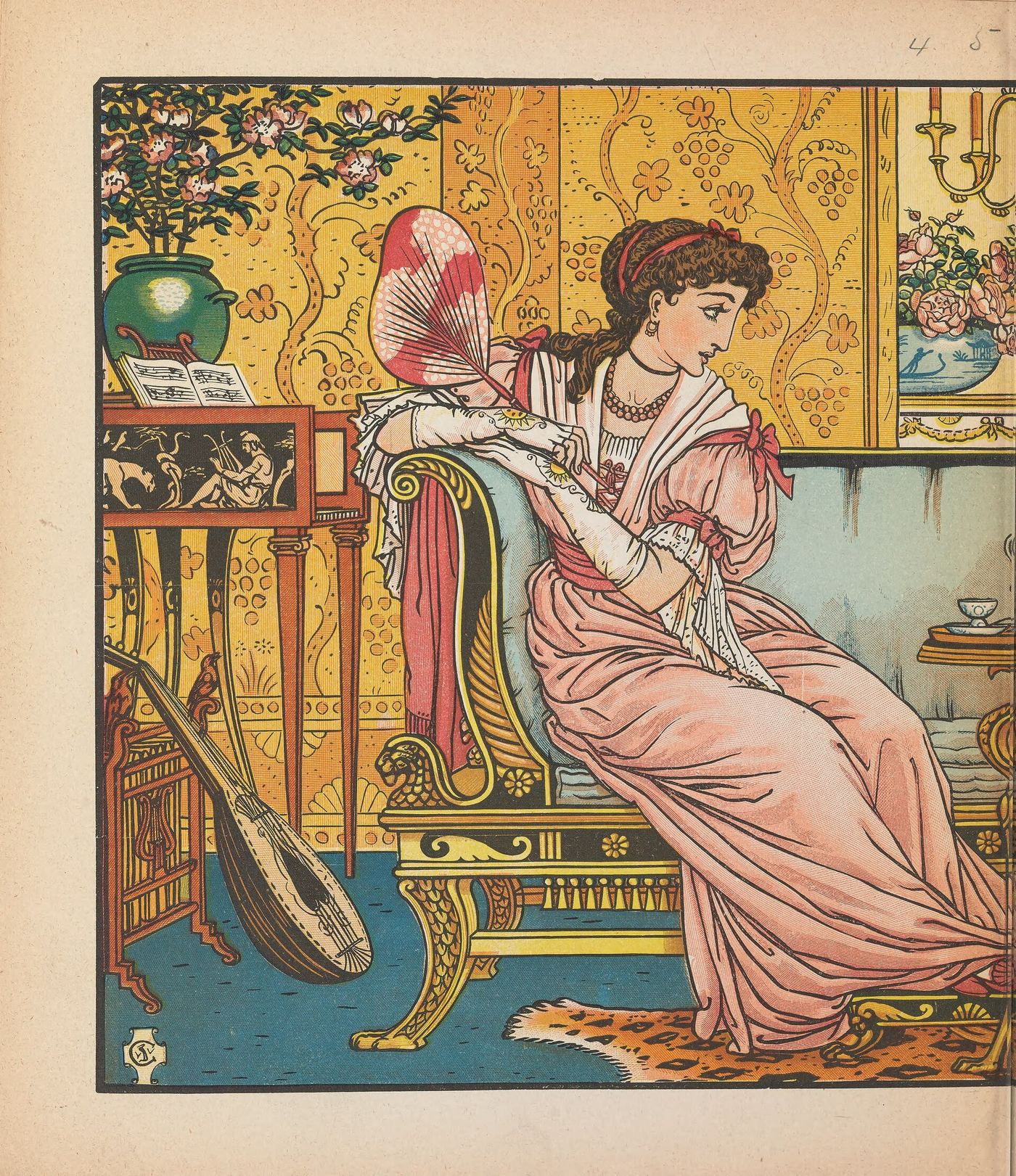
Every illustration on this site is in the public domain: Walter Crane, Gustave Doré, Eleanor Vere Boyle, Edmund Dulac, Arthur Rackham, Warwick Goble, Franz Jüttner, Ludwig Richter, and the title pages of the editions themselves. Each picture is credited where it appears. If you find a mistake in a credit or a citation, tell us and we will fix it.